
Published · SureRoof
Hail damage doesn't look like damage
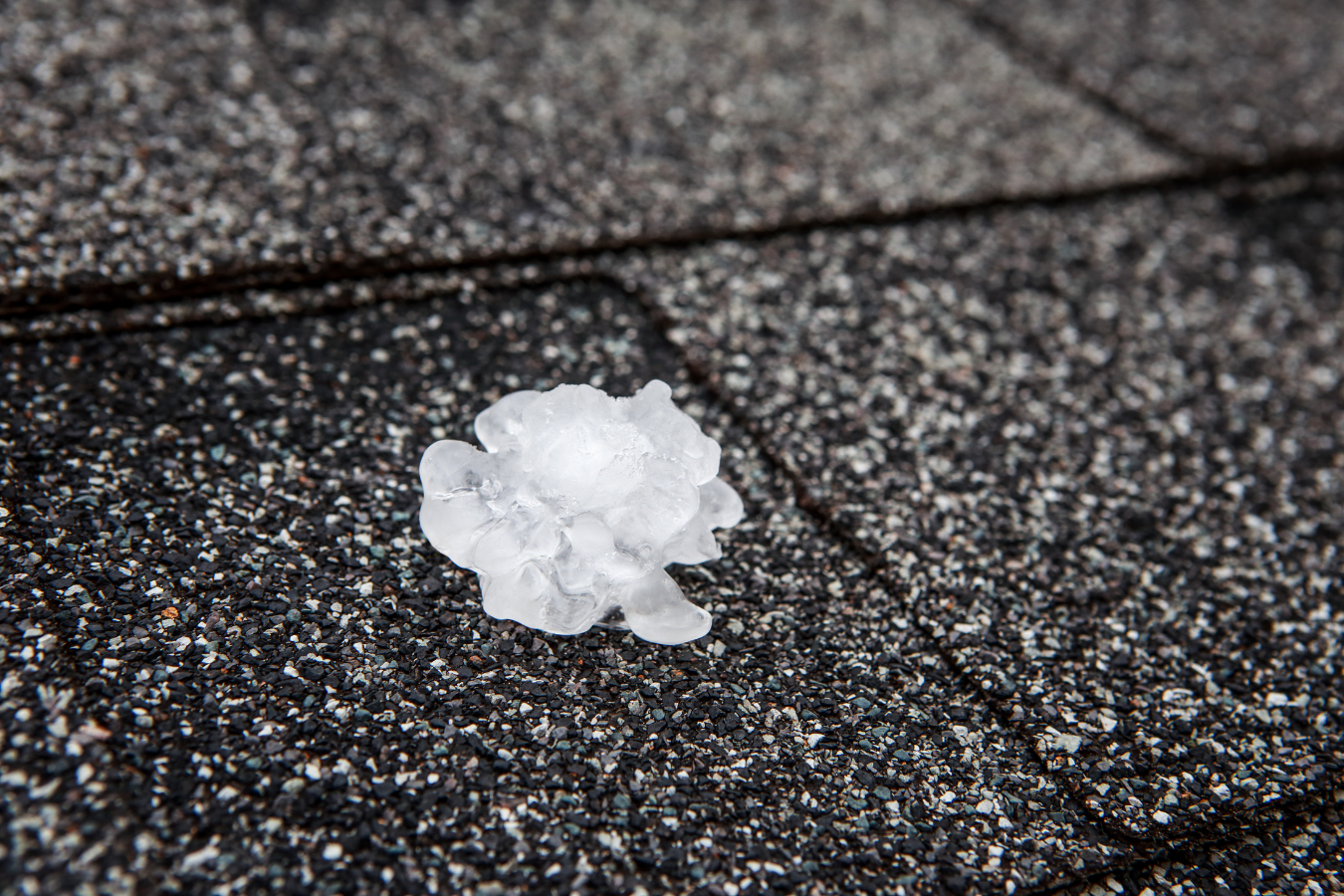
The mistake we see most often is a homeowner standing in the driveway, looking up, seeing nothing obvious, and moving on. Hail rarely punches holes in a roof. What it does is knock granules loose and fracture the asphalt mat underneath, leaving a soft dark bruise. That bruise doesn't leak this year. It leaks in three or four years — long after the claim window closed.
What to check after a storm
- Soft metal. Gutters, downspouts, furnace and bath vents, valley metal, and the roof of your grill or truck hood. Dents in soft metal mean the stones were big enough to hurt shingles.
- Granules in gutters. A cup or two of black sand at the downspout outlet after one storm is a bad sign.
- Bruising. Dark, round spots where the granules are gone. Pressing them feels soft, like a bruise on fruit.
- Window screens, siding, and deck boards. Torn screens and dinged paint help prove the storm's intensity even when the roof looks fine.
- Skylights and chimney caps. Cracked domes and bent caps are common and often overlooked in a claim.
You do not need to climb up there. That's the part we do for free on any roof inspection.
The claim timeline, step by step
- Get documented first. Before you call the carrier, have someone inspect and photograph the roof so you know whether there's real damage. Filing on a hunch and getting denied puts a claim on your record for nothing.
- Note the date of loss. Carriers match your claim against storm data for your address. If you're not sure of the date, the inspection report and local weather records usually pin it down.
- File with your carrier. Give them the date, a plain description, and your photos. Ask for your policy's deductible, whether it's replacement cost or actual cash value, and whether there's a separate wind/hail deductible.
- Meet the adjuster on the roof. This is the step that decides the claim. We show up, walk the roof with the adjuster, and point out the test squares and damage we already documented. Adjusters see dozens of roofs a week; having someone there who knows the roof matters.
- Review the scope. The carrier sends an itemized scope of loss. Check it for the things that get missed: ice-and-water membrane, drip edge, ridge vent, starter course, flashing, steep-pitch and two-story charges, and code upgrades.
- Supplement if the scope is short. If the carrier missed line items, we submit documentation for those specific items. This is normal and usually resolved without a fight.
- Schedule the work, then collect depreciation. On replacement-cost policies you get an initial check less depreciation and deductible, then the held-back amount after the work is complete and invoiced.
Mistakes that get Montana claims denied
- Waiting. Policies limit how long after the date of loss you can file. Damage from a storm two summers ago is often uninsurable now.
- Repairing before the adjuster sees it. Tarp to stop active water, but don't replace shingles until the roof has been inspected — you've erased the evidence.
- No photos of your own. Independent documentation is what turns a "wear and tear" denial into an approved claim.
- Storm chasers. After every big Gallatin Valley hail event, out-of-state crews knock doors with a magnet and a clipboard. They're gone before the warranty matters. Hire someone with a local address you can drive to.
- Deductible "waivers." If a contractor offers to eat your deductible, that's insurance fraud and it voids your claim.
What a documented inspection report includes
When we inspect a hail-damaged roof, you get photos of bruised test squares with a chalk grid, close-ups of soft-metal dents, granule loss at the gutters, damaged accessories like vents and skylights, the shingle type and approximate age, and measured roof area by slope. That's the packet an adjuster can act on. More on our insurance claims page and storm and hail damage service.
Building back stronger
If your roof is being replaced on a hail claim, it's the cheapest moment you'll ever have to upgrade. Class 4 impact-rated shingles resist the hail that took the last roof out, and many carriers discount the premium for them. Our Bozeman roof replacement cost guide shows what the upgrade runs.
Frequently asked questions
How do I know if my roof has hail damage?
Look for dark bruises where granules were knocked off asphalt shingles, dents in soft metal like vents, gutters and flashing, and granules collecting in gutters. Bruising is often invisible from the ground, so a close inspection is needed.
How long do I have to file a hail claim in Montana?
Most Montana homeowner policies require prompt notice and many limit claims to one or two years from the date of loss. File as soon as you suspect damage rather than waiting for a leak.
Will filing a hail claim raise my rates?
Hail is a weather event, not an at-fault claim, so carriers generally treat it differently from a liability claim. Rates across a whole region can rise after a major storm regardless of whether you filed.
Should I pay a roofer to handle my insurance claim?
In Montana only a licensed adjuster or attorney may negotiate a claim on your behalf. A roofer's job is to document damage accurately, meet the adjuster on the roof, and price the work correctly. Be cautious of anyone offering to waive your deductible.
This article is general information, not legal or insurance advice. Read your policy and talk to your carrier about your specific coverage.